


PTFE Parts for Demanding Chemical and Petrochemical Applications


Chemical and petrochemical equipment operates under demanding conditions where components may encounter corrosive chemicals, elevated temperatures, pressure, friction and continuous mechanical movement. Selecting the right material for seals, gaskets, bearings, valve components and other engineered parts is therefore essential. PTFE Parts for Chemical and Petrochemical Industry can provide an effective material solution when chemical resistance, low friction and thermal stability are important design requirements.
PTFE, or polytetrafluoroethylene, is a fluoropolymer widely used in demanding industrial applications. Its strong carbon-fluorine molecular structure gives it exceptional resistance to many chemicals and solvents. Parker's PTFE design guidance identifies chemical resistance, temperature capability, low friction and wear performance among the reasons PTFE is selected where conventional sealing materials may not meet application requirements.
Why PTFE Is Suitable for Chemical and Petrochemical Equipment?
The primary advantage of PTFE is its combination of properties rather than one isolated characteristic. It offers very high chemical resistance, low friction, useful thermal stability and resistance to moisture absorption. These properties make it suitable for components that must maintain reliable performance while exposed to aggressive process media.
According to Parker's PTFE Seal Design Guide, PTFE has a melting point of approximately 342°C and components made from the resin can be used continuously at service temperatures up to about 260°C, although actual operating limits depend on the specific material, design and application.
PTFE also has a very low coefficient of friction and can support dry-running applications. This characteristic is particularly useful for moving components where reducing friction and minimizing wear are important considerations.
Common PTFE Parts Used in Industrial Applications
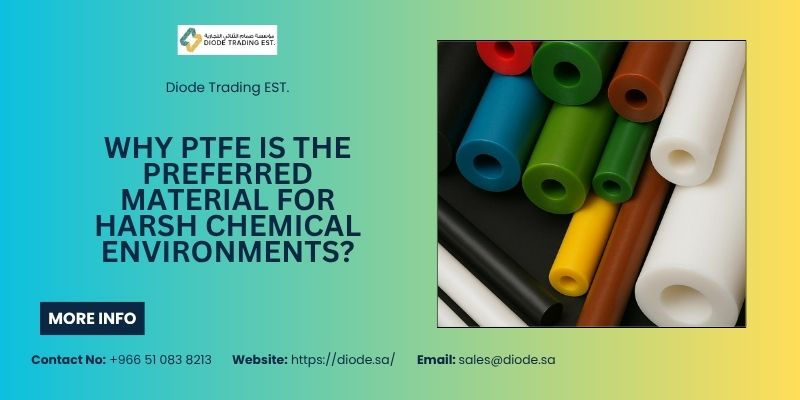
PTFE can be manufactured or machined into different component geometries according to the requirements of the equipment. Common applications include seals, gaskets, valve components, bearings, bushings, rings and other custom-engineered parts.
PTFE Seals and O-Rings
Sealing systems in chemical and petrochemical equipment must prevent leakage while maintaining compatibility with the process medium. PTFE seals are often considered when conventional elastomers cannot provide the required combination of chemical resistance, temperature performance or friction characteristics. Parker lists PTFE O-rings, backup rings, cap seals and spring-energized seals among its PTFE sealing solutions.
PTFE Gaskets
Gaskets create a barrier between mating surfaces and are important in piping, valves, flanges and process equipment. PTFE's chemical resistance can make it useful for applications involving aggressive media. However, gasket selection should consider temperature, pressure, flange design, media compatibility and mechanical loading rather than relying solely on the generic PTFE material name.
PTFE Valve Components
Valves used in chemical processing may encounter corrosive liquids, gases and other aggressive media. PTFE components can be used in suitable valve designs because of their chemical resistance and low-friction characteristics. PTFE and PFA are also used in specialized corrosive chemical-handling valve and fitting systems.
PTFE Bearings and Bushings
Low friction makes PTFE useful in selected bearing and bushing applications. However, mechanical loading, speed, temperature and wear must be evaluated carefully. Pure PTFE can experience deformation under sustained load, so filled PTFE formulations may be more appropriate for demanding mechanical applications.
Why Filled PTFE Can Be Better Than Virgin PTFE
Virgin PTFE offers excellent chemical resistance, but it is not automatically the best choice for every industrial component. One important limitation is creep, or deformation under sustained load. Parker explains that fillers can improve properties such as wear resistance, extrusion resistance and resistance to deformation under load.
Different fillers produce different performance characteristics. Carbon, glass fiber, bronze, graphite, mineral and polymeric fillers can be used in different formulations. The correct choice depends on the application's pressure, temperature, speed, mating surface, media and desired wear characteristics.
This means PTFE selection should be treated as an engineering decision rather than simply choosing the cheapest or most commonly available grade.
High-Temperature PTFE Gaskets for Industrial Service
Temperature is a critical consideration when selecting a gasket material. PTFE can retain useful performance over a wide temperature range, but the actual service limit depends on the formulation and application conditions.
For applications requiring specialized sealing performance, High Temperature Teflon Gaskets Saudi Arabia can be considered when chemical compatibility and thermal requirements make PTFE appropriate. Engineers should evaluate the actual operating temperature, pressure cycling, flange conditions and process fluid before final material selection.
PTFE in Chemical and Petrochemical Processing
Chemical and petrochemical facilities contain numerous points where reliable polymer components can be required. Pumps, valves, pipelines, reactors, tanks and processing systems may expose components to aggressive chemicals or demanding operating conditions.
PTFE's resistance to most industrial chemicals and solvents is one of its strongest advantages. Parker notes that only a relatively limited group of chemicals, including elemental fluorine, certain fluorine compounds and alkali metals, are known to react significantly with PTFE.
Nevertheless, chemical compatibility should always be evaluated against the actual operating environment. Temperature, concentration, pressure and exposure time can influence material performance.
How to Select the Right PTFE Part?
The right PTFE component should be selected according to the complete operating environment rather than the material name alone. Important factors include:
Process media: Identify the chemicals, solvents, oils, gases or other substances contacting the component.
Temperature: Consider both normal operating temperature and potential temperature spikes.
Pressure: Evaluate static and dynamic pressure as well as extrusion risk.
Movement: Determine whether the component is static, reciprocating or rotary.
Speed: Dynamic seals and bearings may require different formulations at higher speeds.
Wear: Consider the expected operating cycle and mating-surface characteristics.
Filler selection: Select the PTFE compound according to the required mechanical and tribological properties.
Manufacturing method: Component processing can influence the final properties of PTFE parts.
Parker specifically cautions that laboratory material data should not automatically be treated as application specifications because actual performance depends on factors such as temperature, pressure, media, speed and mating hardware. Testing under actual or closely simulated service conditions is therefore an important part of material validation.
Why Quality Matters in PTFE Components?
A PTFE component can only perform as intended when its material formulation, dimensions, surface finish and manufacturing quality are appropriate for the application. In precision industrial equipment, dimensional accuracy can be just as important as chemical resistance.
For this reason, buyers should provide suppliers with clear technical information about the application, including operating temperature, pressure, media, dimensions, movement and required service conditions. This helps the supplier identify an appropriate PTFE grade and component design instead of relying on a generic material recommendation.
Frequently Asked Questions
1. What are PTFE parts used for in chemical industries?
PTFE parts are used in suitable seals, gaskets, valve components, bearings, bushings, rings and other engineered applications where chemical resistance, low friction and thermal performance are required.
2. Why is PTFE suitable for petrochemical applications?
PTFE offers strong resistance to many chemicals and solvents, low friction and useful thermal stability. These characteristics can make it suitable for selected sealing and mechanical applications in petrochemical equipment.
3. Is virgin PTFE suitable for high-pressure applications?
Not necessarily. Virgin PTFE can deform under sustained load, so filled PTFE formulations may provide improved resistance to creep, wear and extrusion in demanding applications.
4. What factors should be considered when selecting PTFE parts?
Important factors include chemical media, temperature, pressure, movement, speed, wear, mating surfaces, component dimensions and the required PTFE formulation.
5. Are all PTFE grades chemically identical?
No. Different PTFE formulations and fillers can change mechanical, wear, thermal and other performance characteristics. Material selection should therefore be based on the complete application rather than the PTFE designation alone.
6. Can PTFE parts be custom manufactured?
PTFE can be processed into different component shapes and engineered formulations. Custom requirements should be discussed with the supplier using accurate dimensions and complete operating conditions.
Final Thoughts
PTFE remains an important engineering material for demanding chemical and petrochemical applications because it combines exceptional chemical resistance with low friction and useful thermal stability. However, selecting the right PTFE component requires more than simply choosing a standard PTFE part.
The application environment should determine the material formulation, component design and manufacturing requirements. Pressure, temperature, chemical exposure, movement, speed and wear all influence whether virgin PTFE or a filled formulation is appropriate.
For businesses sourcing engineered polymer components in Saudi Arabia, Diode Trading EST can be considered for PTFE product requirements. Review the available PTFE Parts for Chemical and Petrochemical Industry and provide the application's technical requirements when discussing your component needs.
Full Audio Version:- Click Here
Comments